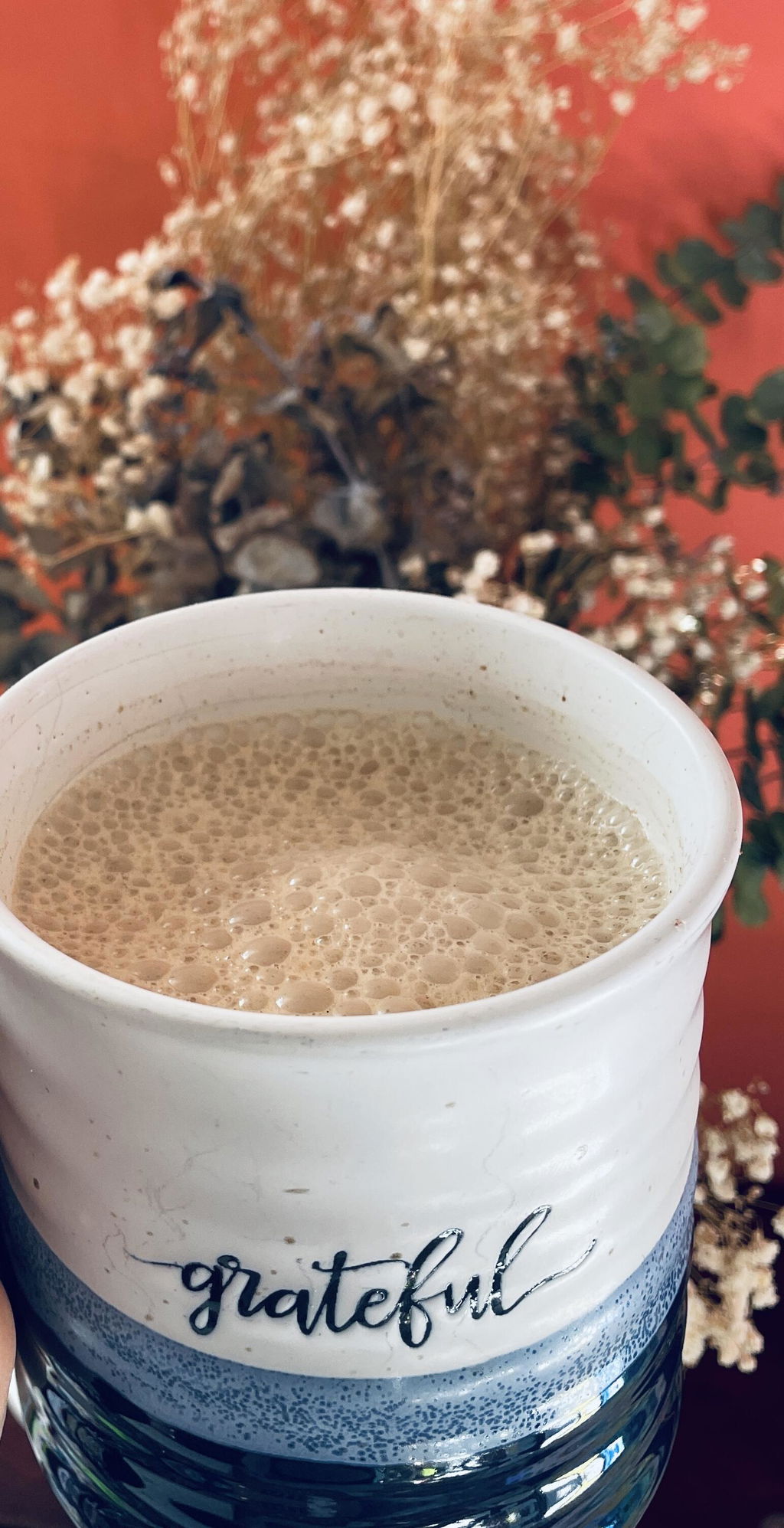



I was standing behind a little table on a patio this week, coffee cups lined up, talking to a group of women who'd come to hear me talk about stress. And somewhere in the middle of it, I said something I've been sitting with for a long time.
How we feel in our body affects how we think.
Anxious. Exhausted. Wired. When we're living in any of those states, we cannot show up with grace. It's not possible. And I don't think we talk about that enough.
The Belief That Almost Ran My Whole Life
For years, I treated my first reaction to something as fact. If I felt anxious about a conversation, I assumed there was something to be anxious about. If I woke up already exhausted, I assumed the day was going to be hard. I never once stopped to ask if that first feeling was actually true, or if it was just the first thing that showed up.
Here's what I've learned since then. The first feeling is not automatically true. It's just the first one.
That single sentence has changed more decisions in my life than almost anything else I've learned.
What's Actually Happening In Your Brain
There's a small part of your brain called the amygdala, and its whole job is threat detection. Here's the part that changes everything: your amygdala cannot tell the difference between a real threat and a vividly imagined one.
It responds the exact same way to:
- An actual danger right in front of you
- A worst case scenario you're playing on repeat in your head
- A painful memory you keep replaying
- A hard conversation you're rehearsing at midnight
Which means you can be lying completely still on your couch and still be flooding your body with stress hormones. Your body doesn't know the difference between what's real and what you're imagining. It just responds.
That's why this work is physical and mental. You can't think your way out of a body that's stuck in alert mode, and you can't calm your body while your mind keeps sounding the alarm. They have to be addressed together.
So What Do You Actually Do With This?
This is where the practice comes in, and I want to be honest with you, it's not a mindset trick. It's not something you do once and it's fixed forever. It's a daily practice, the same way brushing your teeth is a daily practice.
Here's what it looks like in real life. When that first feeling shows up, pause and ask yourself two questions.
Is this the belief I want to hold onto?
Is this the response that actually serves me?
That's it. You're not ignoring the feeling. You're not pretending it away or telling yourself it isn't real. You're simply giving yourself a second to decide whether it deserves the amount of power you're about to hand it.
We Don't Have Problems, We Have Challenges
One of the biggest reframes I've made in my own life is this. We have no problems. We have challenges that make us stronger.
A problem feels like something happening to you. A challenge feels like something you're capable of moving through. Same circumstance, completely different nervous system response. And that response matters more than we've been taught to believe.
This isn't about pretending everything is fine when it isn't. It's about not handing your first reaction more authority than it's earned.
Why This Matters For Your Body, Not Just Your Mind
I talk about this because I lived the alternative. Years of running on stress, treating every uncomfortable feeling as an emergency, pushing through instead of pausing to ask if what I was feeling was even true. My body eventually told me it was done, and it took me a long time to rebuild from there.
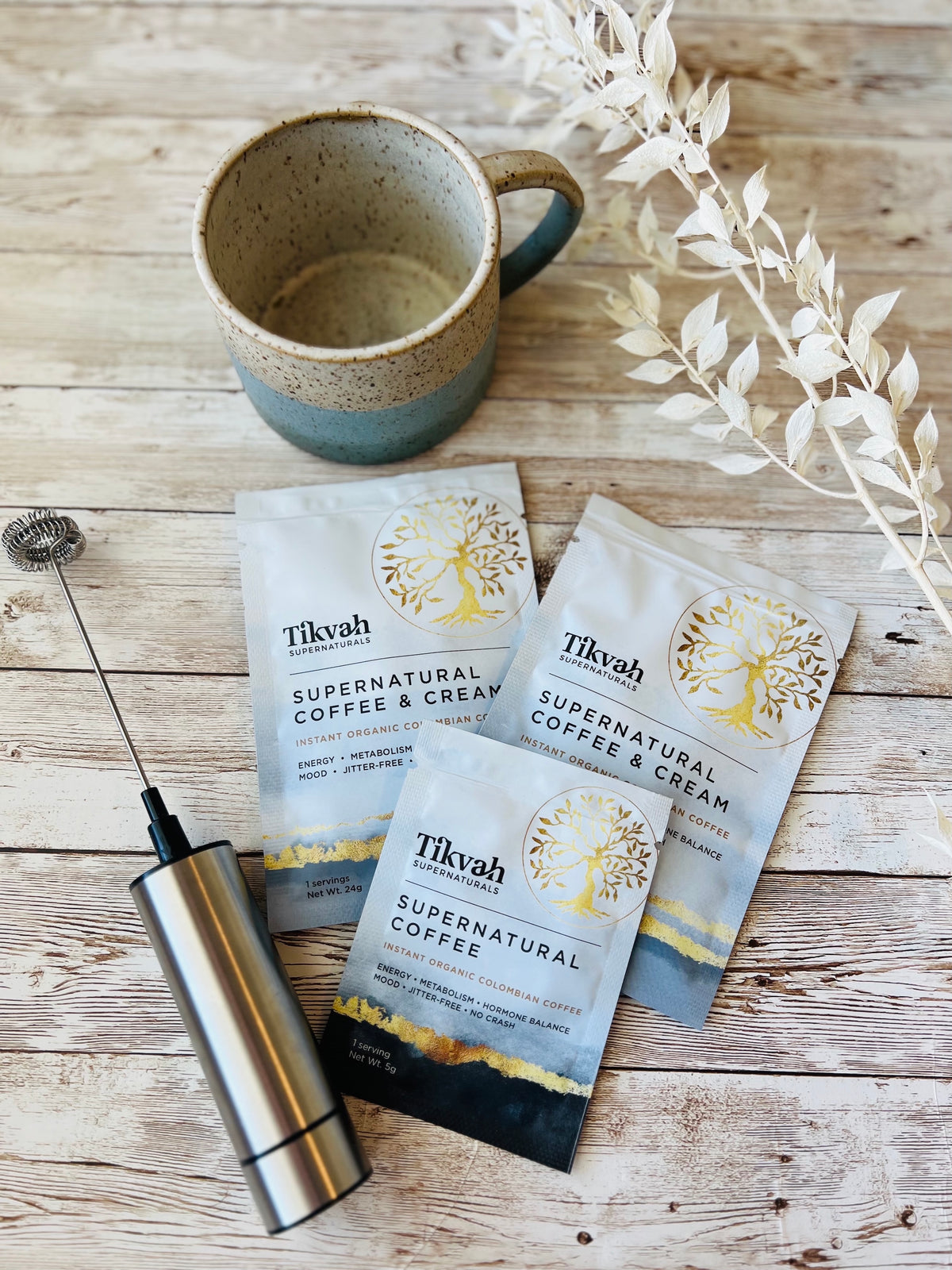
Part of how I rebuilt was learning to support my body the way I was learning to support my mind. That's actually where my adaptogen coffee came from. I still love a good cup of coffee in the morning, it's part of the ritual I'm not willing to give up, but I needed something that worked with my nervous system instead of against it. Something that didn't spike my stress response before I'd even had a chance to ask myself if that response was warranted in the first place.
That's why every cup of Tikvah Supernaturals is built around adaptogens like rhodiola, reishi, and maca, alongside organic coffee. It's steady energy without the crash, and a small daily reminder that supporting your body doesn't have to work against it.
Your Turn
Next time your first feeling shows up and tries to convince you it's the only option, pause. Ask the question. Notice that it's just the first thought, not the final word.