

There are two ways most people respond when something really hard happens to them.
And I say this with no judgment at all, because I have done both.
The first is to push it down. Keep moving. Refuse to let it slow you down or define you. Tell yourself to get it together. Talk to yourself in ways you would never talk to someone you love. Perform wellness and strength on the outside while quietly falling apart somewhere no one can see.
The second is to let it become everything. To build your life around the wound. To let the hardest thing that ever happened to you become the loudest thing about you. The first thing you mention. The lens through which everything else gets filtered.
Both of those are survival strategies. I want to be clear about that. When we are in pain, we do what we can to get through it. There is no shame in either response.
But both of them, if they go on long enough, will eventually cost you.
What pushing it down actually does
When we bury pain instead of processing it, it does not go away. It goes underground.
It shows up in how we relate to people. In how quickly we get defensive or shut down. In the low hum of anxiety that never quite goes away even when things are objectively okay. In exhaustion that sleep does not fix.
The grind-through approach can look like strength from the outside. And for a while, it might feel like it. But the body keeps a record. Chronic stress, unprocessed grief, unexpressed pain, all of it lands in the nervous system and eventually in physical health.
I experienced this firsthand. I spent years pushing through things that deserved more than that. And my body eventually made it very clear that I did not actually have a choice in the matter.
What letting it become your identity does
The other extreme is equally costly, just in a different direction.
When pain becomes our identity, it actually keeps us connected to the person or experience that hurt us. If what happened to you is the main thing about you, then in a real way, whoever caused that pain still has the most important seat at the table of your life.
I do not say that to be harsh. I say it because I think it is worth naming honestly. Staying permanently in the wound is not the same as honoring what happened. And it is not healing.
Your abuser, your loss, your hardest season, those things do not get to be the final word on who you are. That is too much power to hand over.
The third way: the compassionate overcomer
What I have come to believe, and what I have watched work for myself and for people I care about, is that there is a middle path. It is quieter than either extreme. It is not dramatic. It does not make for a tidy before-and-after story.
But it is the only thing that actually works.
The mindset of the compassionate overcomer holds two things at once.
The first is full acknowledgment. You do not minimize what happened. You do not rush yourself toward okay. You do not perform a recovery that is not real. You sit with the weight of it honestly and you speak to yourself with the same kindness you would offer someone you were genuinely trying to help.
If a friend came to you broken and exhausted, you would not tell her to just get over it. You would not let her spiral in it either. You would sit with her. You would tell her the truth gently. You would remind her of who she is.
That is how you deserve to be spoken to. Including by yourself.
The second thing the compassionate overcomer holds is the refusal to stay there permanently. Not a forced positivity. Not a pressure to be further along than you are. Just a quiet, daily decision.
Take the small step. Claim the two-minute win. Do the thing that feels barely possible today. Not because you have to have it all figured out, but because the version of you that existed before all of this happened is still in there. And she deserves to be found again.
Trauma is not your identity
This is the thing I want to leave you with, because I believe it completely.
Trauma is not who you are. It is something that happened to you. Those are two very different things, and the distance between them matters more than I can put into words.
The real you, the one who had hopes and quirks and gifts and a way of seeing the world that was entirely her own before any of this, that person did not disappear. She got buried under a lot of weight. But she is still there.
The work of finding her again is not a straight line. It is not fast. Some days it will not feel like progress at all. But the direction matters more than the pace.
You do not have to push it all down. You do not have to let it be everything. There is a third way. And you are allowed to take it.
Your body is part of this too
I want to gently mention something that does not get talked about enough in conversations about emotional healing.
Your nervous system carries this stuff. Stress, grief, trauma, chronic pain, they do not just live in your mind. They live in your body. In your cortisol levels, your sleep, your energy, your ability to feel calm in ordinary moments.
This is not a small thing. And it is why taking care of your body is not separate from the emotional work. It is genuinely part of it.
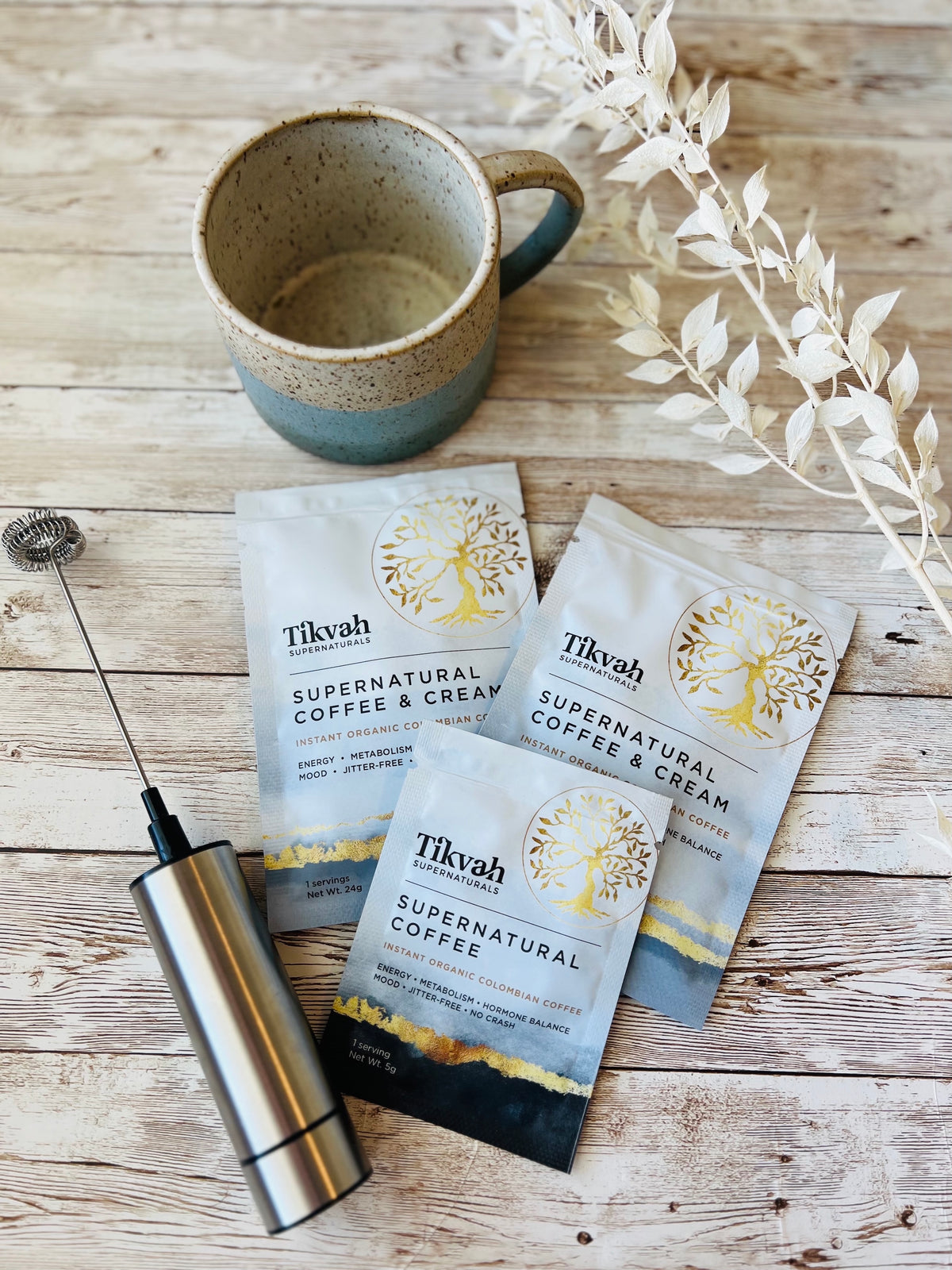
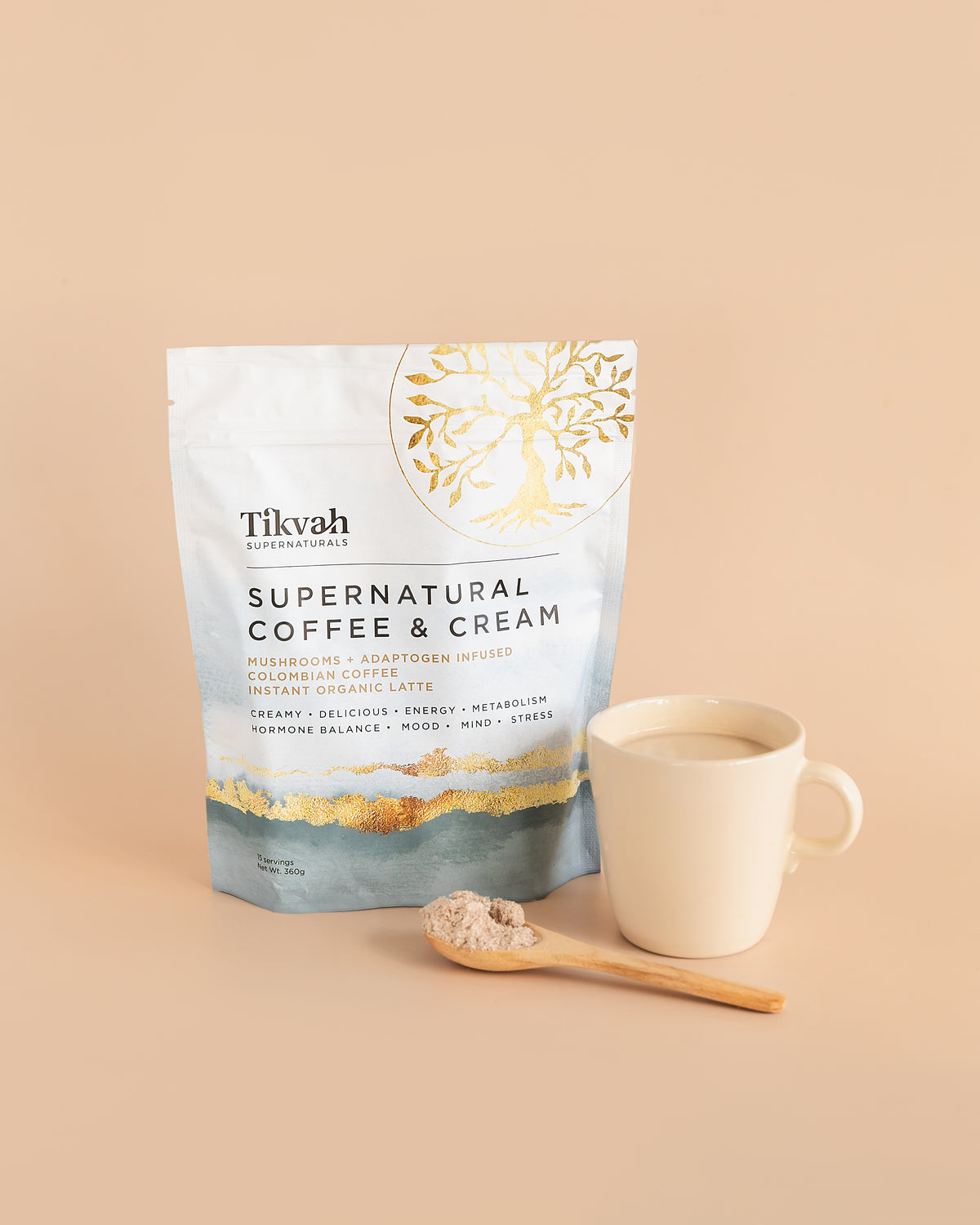
During my own healing journey, one of the things that made a real difference was finding ways to support my nervous system physically, not just mentally. That is a big part of what led me to create Tikvah Supernaturals. Our mushroom coffee blend combines organic coffee with adaptogens like reishi mushroom, rhodiola, and maca to help your body regulate cortisol and sustain calm, steady energy through the day.
When your body has that kind of support underneath the hard work of healing, you have more capacity. More steadiness. More room to take the small steps that actually add up.
You are not your hardest season. You are not what was done to you. You are not the wound.
You are the person on the other side of it, still standing, still moving, still worth knowing.
That is worth doing the work for.