


A friend called me not long ago and she was spiraling.
She had just been offered a promotion she had been working toward for a while, and instead of feeling excited, she was flooded with anxiety. Her thoughts were racing. What if she was not actually qualified? What if she got in over her head? What if she said yes and then let everyone down?
She was ready to talk herself right out of it.
I listened for a minute and then I asked her something.
"What if you're not stressed?"
She went quiet. I could practically hear her brain stall out.
So I kept going. What if this feeling is not fear? What if it is your body gearing up for something big? What if uncertainty is just what growth feels like from the inside? What if you are more capable than you are giving yourself credit for?
By the end of the conversation, she was not just calm. She was excited. Actually, genuinely excited. She took the promotion.
Nothing about her situation changed. The only thing that shifted was how she was interpreting what she felt.
What is actually happening in your body
Here is the part that I think is worth understanding, because once you know this, you cannot unknow it.
Fear and excitement produce almost identical physical responses in your body.
Increased heart rate. Shallow, faster breathing. Heightened alertness. A general sense of being switched on and slightly on edge. Your body is doing the same thing in both states. The physiological signature is nearly identical.
What changes everything is the story your mind puts on top of that sensation.
If you label it fear, your brain responds to it as a threat. You contract, you pull back, you look for the exit. Your nervous system goes into protection mode.
If you label it excitement, your brain responds to it as an opportunity. You lean in. You get curious. You feel ready.
Same body. Same physical sensations. Completely different outcomes based entirely on interpretation.
This is not a motivational idea. Researchers have actually studied this. One study found that people who reframed anxiety as excitement before a high-pressure task performed significantly better than those who tried to calm themselves down. Telling yourself to calm down when you are activated is actually harder for your brain to process than redirecting that energy into something useful.
Your interpretation is not just a mindset trick. It is a physiological lever.
The question that creates the shift
What I said to my friend was simple. "What if you're not stressed?"
That one question interrupts the automatic story. It creates a small gap between the sensation and the meaning you assign to it. And inside that gap is where you actually have a choice.
Most of us have been trained to identify that activated, edge-of-something feeling as bad. Uncomfortable means wrong. Uncertain means dangerous. Anxious means stop.
But none of that is automatically true.
Discomfort is often just your nervous system registering that something matters to you. Uncertainty is what it feels like to be doing something you have not done before, which is the only way growth ever happens. That flutter in your chest before something big is your body waking up, not shutting down.
The question "what if you're not stressed?" is not about denying that something feels intense. It is about opening the door to a different interpretation before the default one takes over.
How to start practicing this
You do not have to wait for a friend to ask you the right question. You can build this habit yourself.
The next time you feel that charged, uncertain, this-is-a-lot feeling, try pausing before you label it. Just for a second. Then ask yourself a few things.
What if this feeling is not a warning? What if it is information? What is it telling me I care about? What if I am actually more ready for this than I think?
You are not trying to convince yourself of something false. You are simply giving your brain more than one interpretation to work with before it locks in on the one it defaults to.
Over time, this practice genuinely changes how you respond to high-pressure moments. You start to recognize that activated feeling for what it often actually is: your body showing up for something that matters.
The body piece that most people miss
I want to add one more layer here because I think it matters.
How well you are able to do this kind of interpretation work in the moment depends a lot on the baseline state of your nervous system.
When your cortisol is chronically elevated and your body is running on stress and depletion, that gap between sensation and response gets very small. Everything feels more threatening. Everything triggers faster. You have less room to pause, question, and reframe because your system is already at capacity.
This is something I experienced personally during the years I was dealing with adrenal fatigue. I wanted to respond differently to stress but my body was so depleted that I was operating from a deficit before anything even happened.
Supporting your nervous system physically is not optional if you want to do this work well. It is actually foundational.
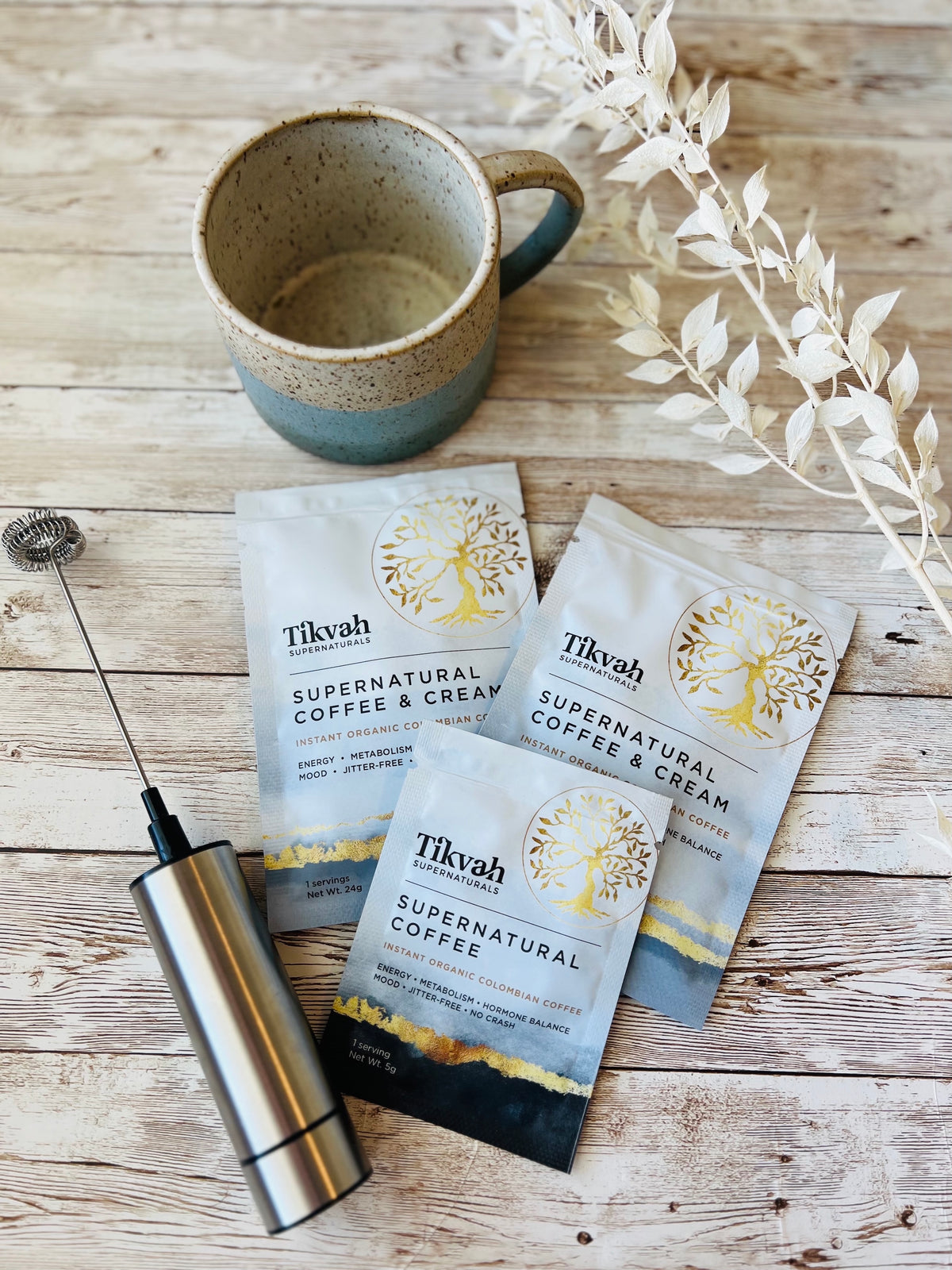
That is a core reason why I created Tikvah Supernaturals. Our mushroom coffee blend combines organic coffee with adaptogens like reishi mushroom, rhodiola, and maca to help your body manage cortisol and sustain calm, steady energy throughout the day. No spike, no crash, no extra burden on your adrenals.
When your body has that kind of support underneath it, the mental and emotional work becomes genuinely more accessible. You have more space to pause. More capacity to choose. More room to ask yourself "what if I'm not stressed?" and actually mean it.
My friend still talks about that conversation. Not because I said anything particularly brilliant, but because one question opened a door she did not know was there.
Your nervous system is not always giving you an accurate read on reality. Sometimes that feeling you are calling fear is actually your body telling you that you are about to do something that matters.