

Let me say something that most people are too careful to say out loud.
We confused equal value with identical biology. And that confusion is costing women their health.
I am not here to tell you that women cannot do what men do. We can. I am a lawyer, an entrepreneur, and a mom. I have built something from nothing while running on very little sleep and a whole lot of determination. I believe deeply in what women are capable of.
But I also lived through an adrenal crash that stopped me completely. And what I understand now that I did not understand then is that I was working against my own biology for years without knowing it. Nobody ever taught me otherwise.
So let's talk about it.
The biological reality nobody is teaching us
Men and women are not biologically identical. That is not an opinion. It is physiology.
Men operate on a roughly 24-hour hormonal cycle. They reset daily. Women run on a 28 to 30 day cycle with significant hormonal shifts happening across four distinct phases. Those phases affect energy, mood, metabolism, cognitive function, stress tolerance, and recovery. They are not a liability. They are a design. But they do mean that women's bodies respond to stress differently than men's.
Here is the piece that I think is most important to understand.
Men have 10 to 20 times more testosterone than women. Testosterone literally blunts the cortisol response. It acts as a buffer, absorbing some of the physiological impact of stress. That is why a man can work a 14-hour day, decompress with something mindless, sleep, and genuinely feel ready to go the next morning. His biology is cushioning the hit.
When a woman is in that same environment, pulling those same hours, her HPA axis, which is the system that regulates the stress response, is taking the full impact every single time. There is no built-in buffer of the same magnitude.
This is not a flaw. But it is a fact. And operating as if it does not exist is where a lot of the damage happens.
What chronic stress actually does to women's hormones
When your body is under sustained stress, it prioritizes survival. That means cortisol production goes up. And to fuel that cortisol production, your body draws from a precursor hormone called pregnenolone.
Here is where it gets important. Pregnenolone is also the building block for progesterone. Progesterone is the hormone that calms your nervous system, supports sleep, and helps regulate your mood. When your body is in chronic stress mode and pulling pregnenolone toward cortisol production instead, your progesterone levels drop.
Less progesterone means less of the natural calming signal your body depends on. Which means more stress reactivity. Which means more cortisol. The cycle feeds itself. Your body stays in a heightened state and eventually, something gives.
This is what happened to me. I did not understand the mechanism at the time. I just knew that one day I went from vibrant and functional to barely able to get off the couch. My body had been sending signals for a long time. I had not been taught to listen to them.
The part that requires some honesty
I want to say something here that is not easy to hear, and I say it because I had to hear it about myself too.
A lot of the exhaustion, the burnout, the adrenal crashes that so many women experience, they do not just happen to us. There is often a trail of decisions behind them. Decisions to say yes when the honest answer was no. To keep going when the body was asking to stop. To take on more and more because rest felt selfish or weak or like something we had not earned yet.
Women are not just carrying professional demands. We are often carrying the invisible weight of households, relationships, children, aging parents, and the emotional labor of everyone around us. And on top of all of that, many of us have internalized the idea that needing rest means we are not strong enough.
That is not a standard most men are holding themselves to. And I say that not to create division but to name something real.
Ambition and self-care are not opposites. Working hard and working sustainably are not the same thing. And the idea that rest is something you have to earn is one of the more expensive lies our culture sells to women.
What I actually believe women need
I am not saying to lower your goals. I am not saying to step back from the life you are building.
What I am saying is that you need to get serious about listening to your body and supporting it through the stress. That means being realistic about what you can carry at any given time. It means learning to delegate without guilt. It means actually saying no to the things that are draining you without a good return. It means building rest into your life not as a reward but as a requirement.
Women need more rest than we are typically giving ourselves. More nourishment, not just in food but in the quieter things that restore us. More calm. More permission to work in a rhythm that makes sense for our biology rather than one that was designed around a 24-hour hormonal reset we do not have.
Equal does not mean identical. And the sooner we stop trying to operate as if it does, the healthier and honestly more effective we are going to be.
Nourishing your body is not optional
One of the things I came to understand through my own crash and recovery is that supporting your body through stress is not a nice-to-have. It is foundational. Your hormones, your energy, your mood, your ability to think clearly and show up fully, all of it depends on how well you are physically supporting your system.
This is a core reason why I created Tikvah Supernaturals. After my adrenal crash and the years of rebuilding that followed, I became deeply serious about finding ways to support my body's stress response without making things worse. I needed something that would give me genuine, steady energy without spiking cortisol further or adding more burden to an already taxed system.
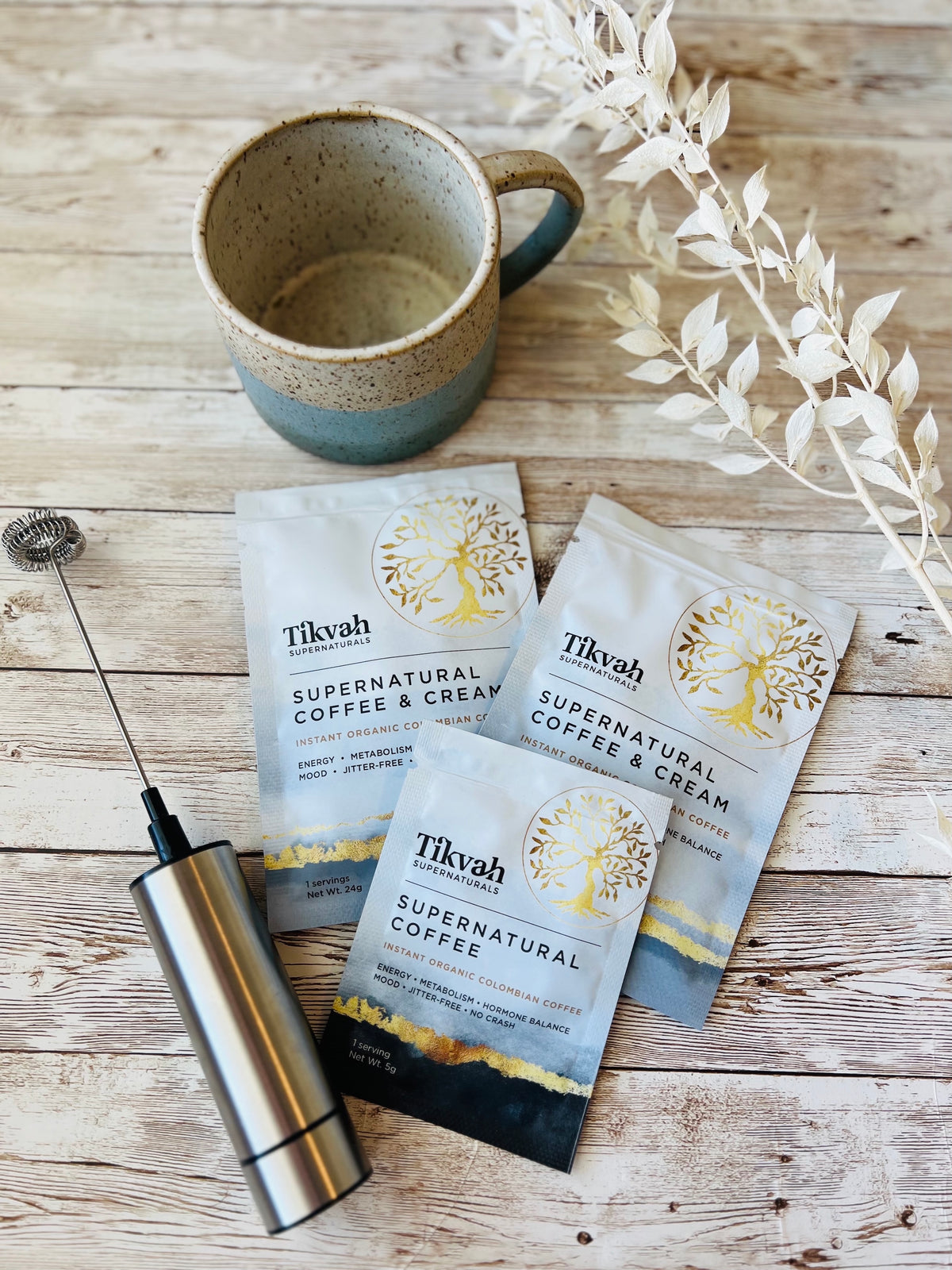
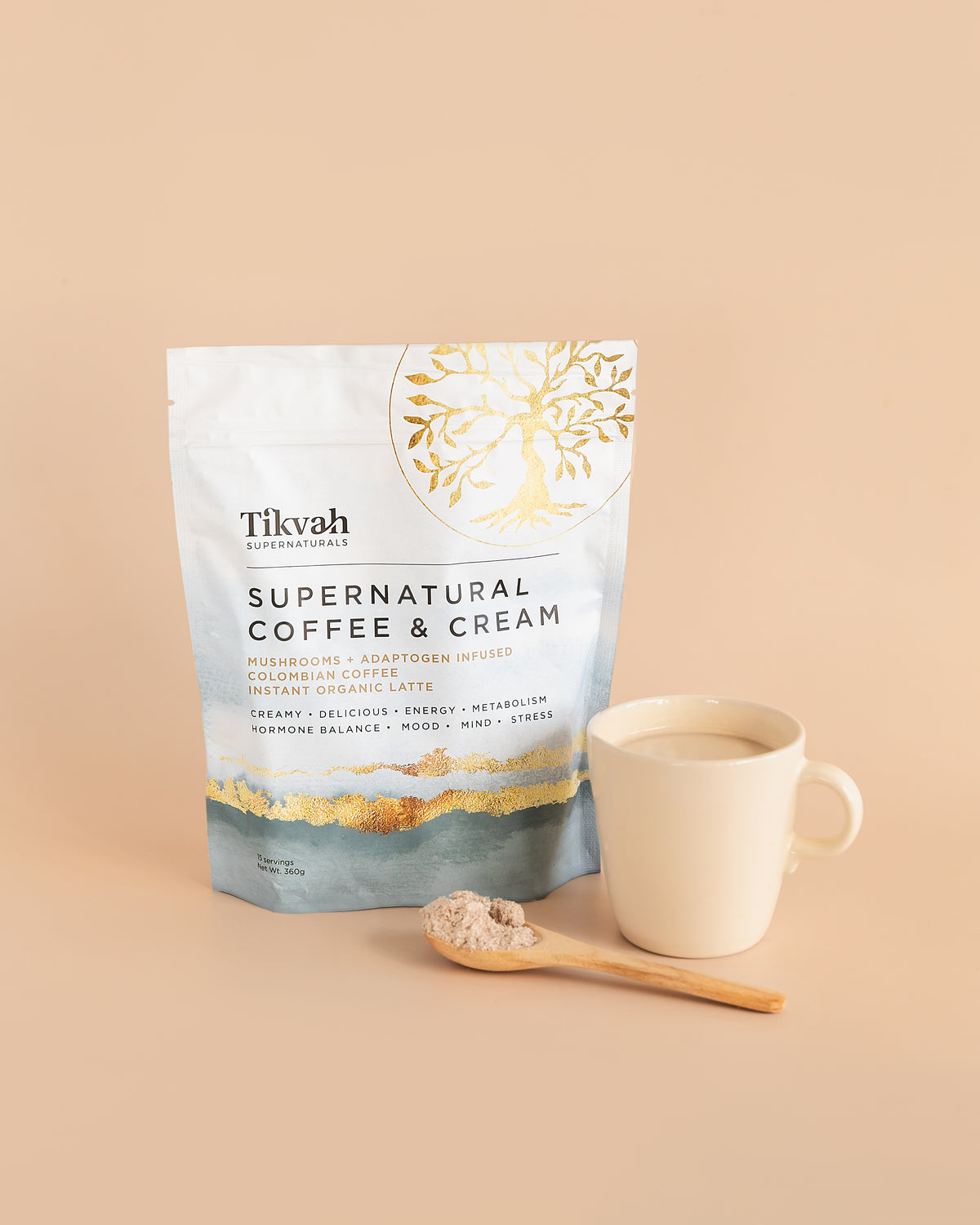
Our mushroom coffee blend combines organic coffee with adaptogens like reishi mushroom, rhodiola, and maca specifically to support cortisol balance, sustained energy, and nervous system resilience. It is the kind of daily support that adds up over time. Consistency is where the benefit really builds.
If you are a woman who is working hard, carrying a lot, and feeling the physical cost of it, this was made with you in mind.