

Most of us were never actually taught how our emotions work.
We picked up what we know from watching the adults around us, from how we were raised, from culture and media and experience. And a lot of what we absorbed? It wasn't quite right.
I spent years on autopilot when it came to my emotions. I thought what I felt was just the truth. I thought my reactions were just "who I am." I thought certain people had the power to make me feel certain ways and there wasn't much I could do about it.
When I finally started to question those beliefs, my entire experience of stress and relationships and even my own body started to shift.
So let's talk about it. These are the five lies most of us carry around about our emotions, and what's actually true instead.
Lie #1: "That's just my personality."
This one sounds harmless, but it keeps so many people stuck.
When we label a pattern as our personality, we treat it like it's fixed. Non-negotiable. Just the way things are. But the truth is, most of our emotional patterns are not permanent. They are practiced.
Somewhere along the way, you repeated a response often enough that it became automatic. Maybe it was pulling away when things got hard. Maybe it was getting defensive when criticized. Maybe it was going quiet instead of speaking up.
Those patterns formed for a reason. They served you at some point. But they are not you. And they are not locked in.
Patterns can be unlearned. New ones can be built. That does not happen overnight, but it does happen.
Lie #2: "They made me feel this way."
This one is so easy to hold onto because it genuinely feels true in the moment.
Someone says something cutting and you feel hurt. Someone lets you down and you feel angry. It makes total sense to connect the dots between what they did and how you feel.
But here is the piece that changes everything: no one actually controls your emotional response but you. What someone else does is the trigger. Your response is yours.
This is not about excusing bad behavior or pretending things do not hurt. It is about recognizing that your reaction lives in you, not in them. And that means you have more power here than you thought.
Lie #3: "I can't help how I react."
I believed this for a long time. Especially in high-stress moments. It felt like my reactions were just happening to me.
What I have learned since then is that this is actually a nervous system issue more than a character issue. When your stress response is chronically elevated, your window for pause before reaction gets very, very small. It feels like you have no control because in that state, you almost do not.
But that is not proof that control is impossible. It is a sign that your nervous system needs support.
Awareness is the entry point. Not willpower, not sheer determination. When you start noticing the moment before you react, you start finding the space to choose differently. That space is where everything changes.
Lie #4: "My feelings are the truth."
Feelings are real. They are always valid in the sense that they are genuinely happening inside you. But they are not always accurate reporters of reality.
Your brain is constantly making predictions based on past experiences, threat signals, physical states, even blood sugar. Your feelings are outputs of that process. They are data. They are information worth paying attention to.
But they are not facts.
A feeling of dread does not mean something terrible is coming. Anxiety does not mean you are in danger. Sadness does not mean things will not get better. When you treat feelings as facts, you end up making decisions from a distorted picture of what is actually happening.
Question them. Get curious about where they are coming from. There is usually something useful underneath if you look.
Lie #5: "I have no control over how I feel."
This is probably the most deeply held lie of all.
And I get it. Emotions can feel so big and so fast that the idea of having any influence over them sounds almost laughable in the thick of it.
But your emotional state is not just happening to you. It is being shaped by your thoughts, your physical state, your environment, your nervous system, your daily habits, all of it. Which means there are real, concrete ways to influence how you feel.
Not through suppression. Not through toxic positivity. But through genuinely addressing what is underneath.
This is why I talk so much about cortisol and stress physiology. Because what is happening in your body is directly connected to your emotional experience. A chronically stressed nervous system makes emotional regulation genuinely harder. And support from the inside out is not optional, it is foundational.
You are more in control than you think.
That is the takeaway from all five of these. The lies shrink your sense of agency. The truth expands it.
Building real emotional resilience starts with auditing the stories you have been running on. It is quieter work than a morning routine or a supplement protocol. But it is some of the most important work there is.
And as someone who has been through the process of rebuilding herself from the inside out, I will tell you, it compounds. The more you do it, the steadier you become.
A note on nervous system support:
One thing I believe strongly is that emotional work and physical support go hand in hand. You cannot think your way out of a dysregulated nervous system. You have to also tend to the body.
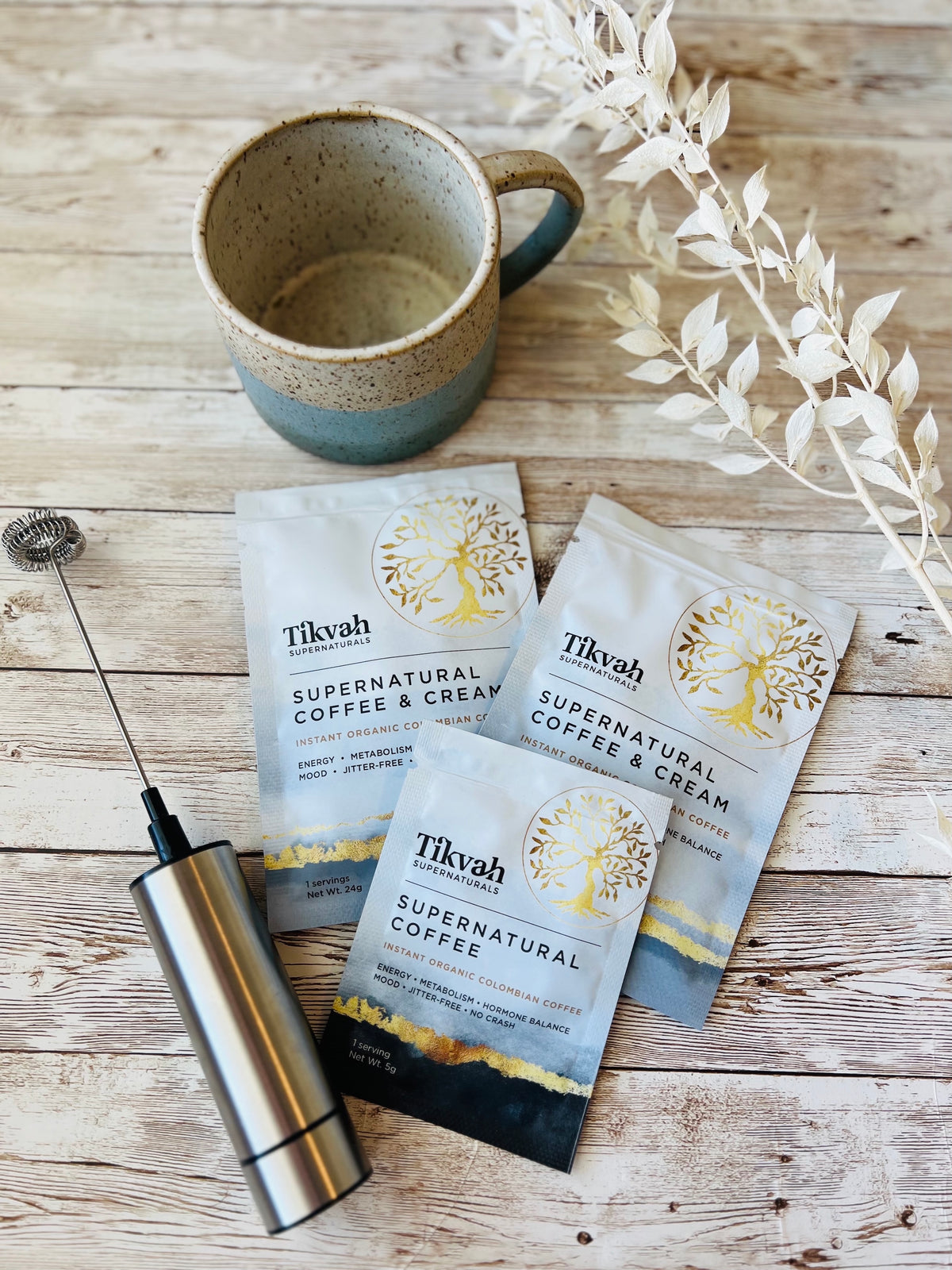
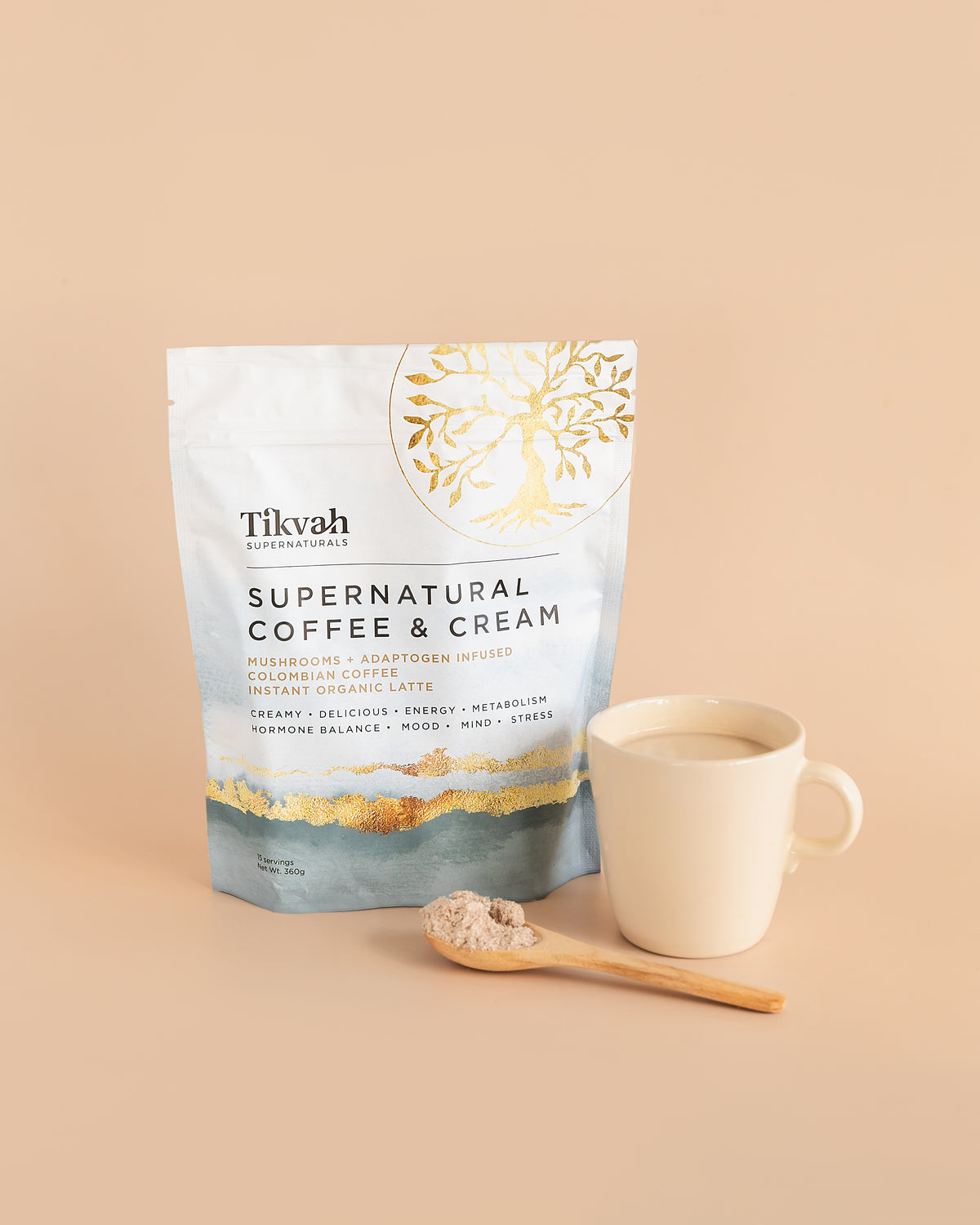
That is part of why I created Tikvah Supernatural. My mushroom coffee blend was born out of my own healing, specifically the years I spent managing adrenal fatigue and hormonal imbalances, and trying to find something that genuinely supported my energy and stress response without making things worse.
The adaptogens in our blend, things like reishi mushroom, rhodiola, and maca, work with your body to support cortisol balance and steady energy. Not a spike, not a crash. Just a calmer, more grounded baseline.
If you are doing the inner work and want something that supports your nervous system on the physical side too, it is worth trying. Consistency is where the real benefit builds, and it is easy to make part of your daily routine.